
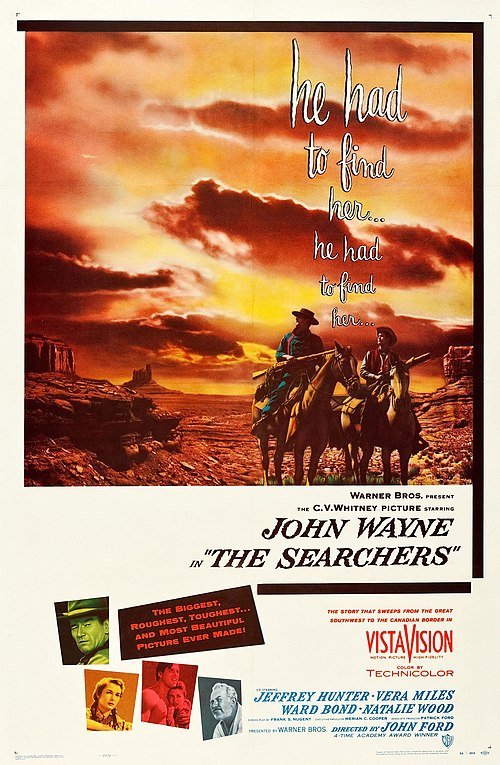
The Searchers
USA, 1956
Director: John Ford
Screenwriters: Frank S. Nugent, based on the novel by Alan Le May
Genre: Western
Soundtrack composer: Max Steiner
Editing: Jack Murray
Production: C.V. Whitney Pictures
Main cast:
John Wayne (Ethan Edwards)
Jeffrey Hunter (Martin Pawley)
Vera Miles (Laurie Jorgensen)
Ward Bond (Rev. Capt. Samuel Clayton)
Natalie Wood (teenage Debbie)
Lana Wood (child Debbie)
John Qualen (Lars Jorgensen)
Olive Carey (Mrs. Jorgensen)
Henry Brandon (Scar)
Ken Curtis (Charlie McCorry)
Harry Carey Jr. (Brad Jorgensen)
Antonio Moreno (Emilio Gabriel Fernández y Figueroa)
Hank Worden (Mose Harper)
Beulah Archuletta (Look)
Walter Coy (Aaron Edwards)
Dorothy Jordan (Martha Edwards)
Pippa Scott (Lucy Edwards)
Patrick Wayne (Lt. Greenhill)
Plot
Texas, 1868. Ethan Edwards returns to his relatives’ home after several years of absence. He was fighting in the Civil War on the defeated side of the Southern Confederates.
Back home, he is reunited with his brother Aaron, sister-in-law Martha, and nieces Lucy and Debbie. There is also a young man named Martin, adopted into the family. He has some Comanche ancestry, which arouses certain hostility in Ethan.
Solitary and taciturn, Ethan does not get along with the talkative Reverend Clayton, who also serves as military captain and seeks to exercise leadership. The reverend warns that Indians are prowling the area, that they have already stolen or killed farmers’ cows, and that an expedition should be mounted to prevent them from approaching the village. The Edwards’ house, by the way, is quite far from the village.
While Ethan and Martin are away on this expedition with the reverend, the Comanches take the opportunity to attack the isolated Edwards’ house, looting and setting it on fire. Led by the dreadful chief Scar, they kill the adults and take little Debbie with them.
Together with Martin, Ethan embarks on a long search to try to rescue his niece…
Commentary
Originally, the Western genre emerged as a way of expressing the point of view of the white pioneers in North America, the progressive conquest of that part of the continent from coast to coast, the process of the gestation of the United States. Crucial moments or details of that era, which are often included in the context of Western novels and films, were the Civil War, the gold rush, the construction of the railroads, and the battles against the Indians.
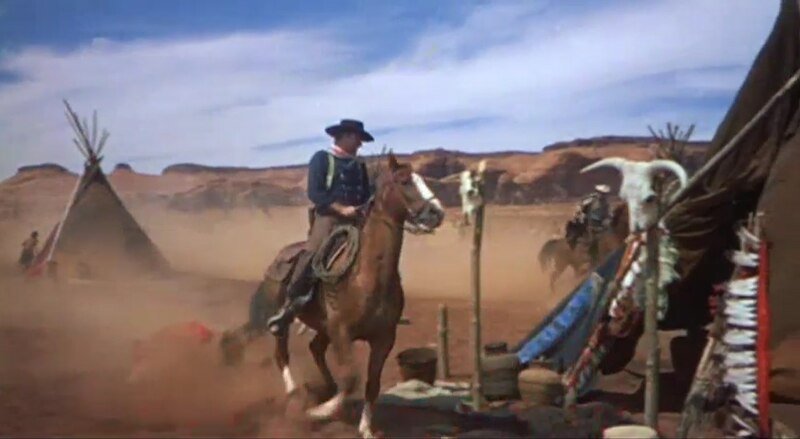
This latter theme forms the core plot of this adventure western, based on a novel by Alan Le May. However, ethnic conflict is portrayed without the nostalgic romanticism of the European pioneers who settled in the northern part of the New World. The film is one of the first in the genre to address the relationship between whites and Indians from a fairly “progressive” perspective.
While the Italian western that emerged in the following decade was dominated by amorality, “antihero” protagonists, and main characters who were usually bounty hunters or outlaws, the American western began to glimpse the messages of tolerance and emancipation typical of the time, which would later develop (or rather degenerate) into what we now know as “political correctness.”
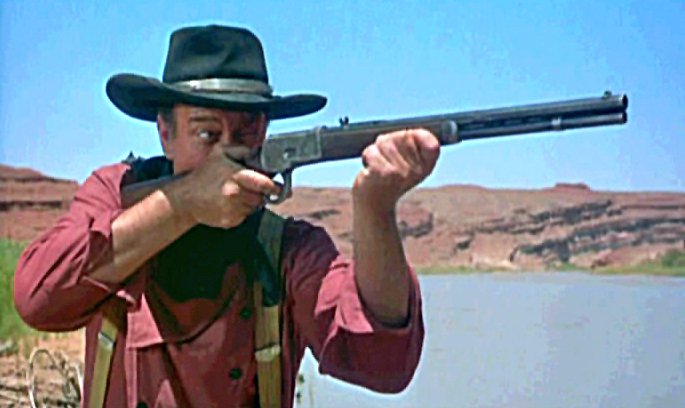
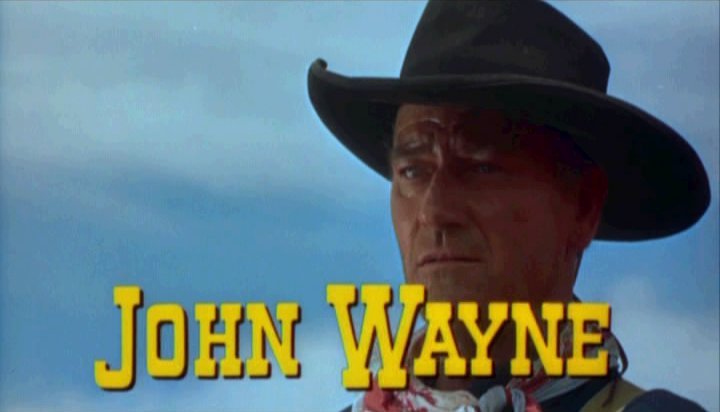
In “The Searchers,” the main characters are constructed with enormous psychological depth. This is especially true of Ethan, played by the great John Wayne. Ethan is a war veteran, a tough guy, taciturn, relentless, and determined. However, at the same time, he is shown to be tormented by a heavy internal conflict, torn between his past convictions and loyalties (he fought on the losing side of the Confederates) and the circumstances of the present.
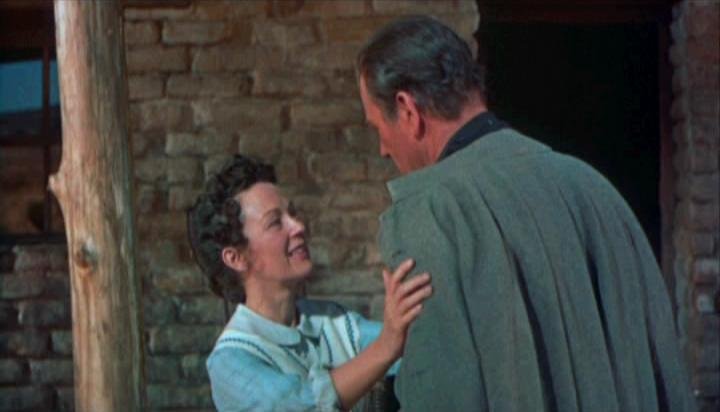
Subtle hints are given at the beginning about the true relationship between Ethan and his sister-in-law Martha. It is suggested that they had an affaire before he left for war. This could imply that Debbie is not actually Ethan’s niece, but his daughter. His cold, hard, and melancholic character could be related to a feeling of guilt for having been disloyal to his own brother, now dead after the Comanche raid that Ethan could not prevent. On the other hand, on many occasions Ethan seems to be motivated more by an atavistic feeling of revenge against the Indians than by the purpose of rescuing Debbie. In some scenes, it is even shown that the protagonist would prefer the girl to die rather than be assimilated by the Comanches.
His antagonist, the Indian chief Scar, is also driven by instincts of revenge, commenting on one occasion that white men killed his two sons and that is why he carries out these attacks. During Comanche raids, many women are regularly kidnapped, and in a shocking scene we see several of them, including some very young girls, who have become crazy and have even been deprived of their ability to speak, as a consequence of their captivity and the trauma it entails. Debbie, for her part, seems to have been brainwashed, as at first she remembers nothing of her childhood and does not recognize her stepbrother Martin.
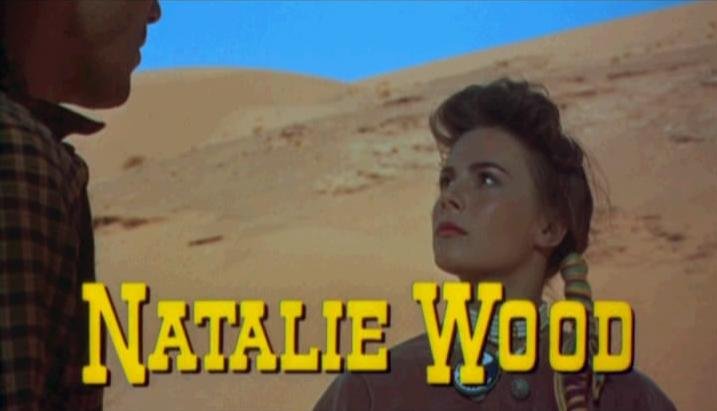
And speaking of traumatic situations: Natalie Wood, the actress who plays teenage Debbie, was allegedly raped during a casting by “a major Hollywood actor” when she was 16, in 1954. According to her younger sister Lana Wood (who also appears in “The Searchers” playing Debbie as a child), the perpetrator was Kirk Douglas. Natalie and Lana’s parents were of Russian and Ukrainian origin (the Zacharenko-Gurdin family) and had fled to the US from the communist massacres following the Bolshevik Revolution. Natalie died in 1981, in circumstances that remain unclear, after drowning in a boating accident.
The film, which in Spain was given the epic-mythological title “Centauros del desierto” (Centaurs of the Desert) and in Latin American countries has the melodramatic title “Más corazón que odio” (More Heart Than Hate), is simply called “The Searchers” in its original version. It could almost be said that this Confederate veteran played by John Wayne is not only searching for his niece, but also searching for himself. Martin, for his part, is searching for his stepsister, but he is also searching for his own identity (he has some Comanche blood). Above all through the character of Ethan, the film contains reminiscences of the so-called revisionist western, which would emerge somewhat later—with The Wild Bunch (Sam Peckinpah, 1969) being one of the most emblematic contributions to this subgenre that focuses on the decline of an era.
Also interesting is the role of the merchant Futterman, who supposedly acts as a mediator between the Indian kidnappers and the two searchers who want to rescue Debbie. As we shall see, Futterman does not play fair…
A noteworthy supporting actor is Antonio Moreno, who was Spanish by birth and emigrated to the US at a very young age, beginning a prolific acting career already in the silent film era. Moreno plays a Mexican here, who also acts as a mediator between the Comanches and the two protagonists. By the way, Spanish (and also Mexican) viewers will find the scene in the cantina, where flamenco dancers appear, quite comical (as if that dance were typical of Mexico!). We saw Antonio Moreno in the interesting “It” (Clarence Badger, 1927).
There are also occasional touches of humor provided by the characters of Mose, the Indian girl in love with Martin, and the fights between Martin and Charlie (the suitor of Laurie, a girl who is also in love with Martin).
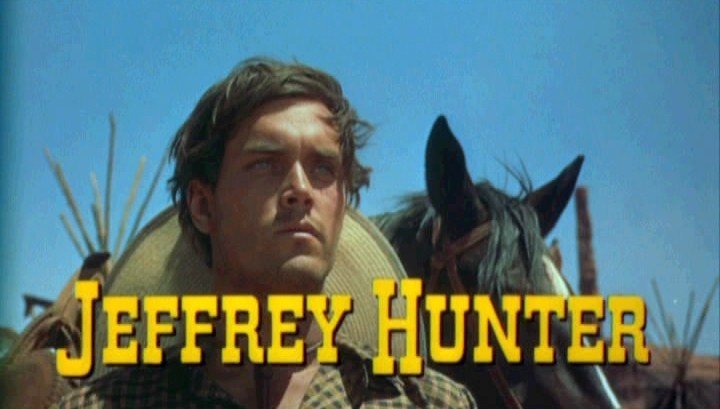
Much of the film shows the conflict between the mature Ethan and his step-nephew Martin. At times they detest each other, but deep down they appreciate each other; and above all, they need each other.
In regard tosome symbolic connotations: Elder Ethan could in fact represent the decline of the “West” as it was known until now. The beginning of a new “West” would be embodied by the young Martin, who has some Native American blood (there is a scene in the film where Ethan prepares a will for his adopted nephew); and by the uprooted Debbie, who lost her connection to her own people after being kidnapped as a child and raised in a foreign culture. It is curious to note that she was kidnapped while trying to hide outside the house, next to her grandparents’ grave, a clear reference to her ancestors, from whom she is metaphorically and literally torn away.
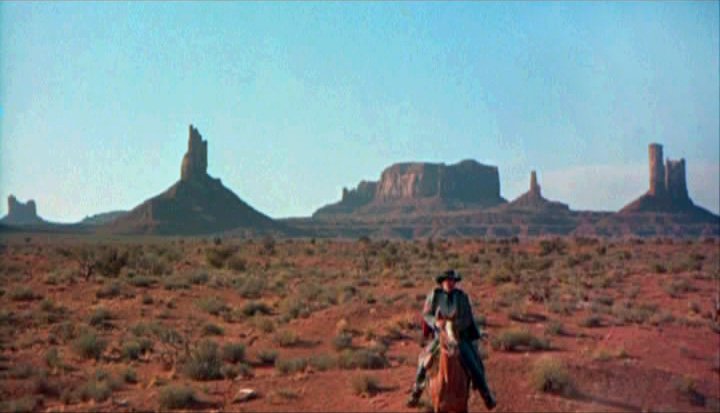
That seems to be the message and subliminal connotations of the film. In terms of aesthetics, the film features masterful staging and superb visual power, with beautiful rocky and desert landscapes, shot mainly in Arizona and Utah (although the story is set in Texas). The film is among the favorites of filmmakers such as John Milius (director of Conan the Barbarian) and Martin Scorsese. The latter even commented that the tormented Ethan, played by John Wayne, served as inspiration for him to shape the character of Travis Bickle in his Taxi Driver (1976), played by Robert De Niro.
Get The Searchers HERE!
(This is an affiliate link. I may earn a commission if you purchase through these link, at no extra cost to you. As an Amazon Associate, I earn from qualifying purchases.)