

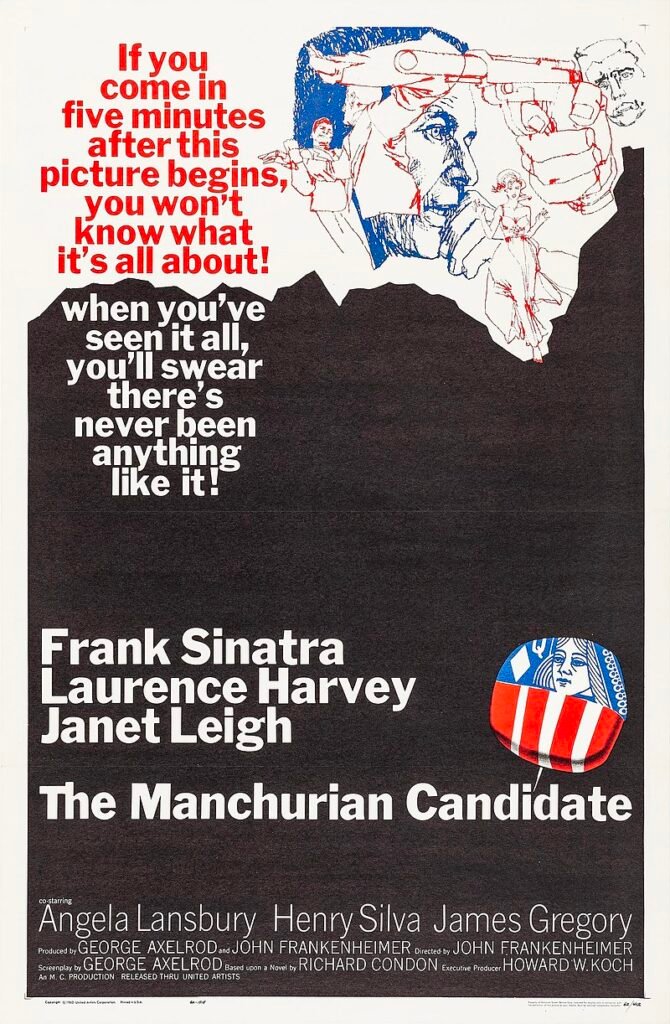
The Manchurian Candidate
USA, 1962
Director: John Frankenheimer
Screenwriter: George Axelrod (based on the novel by Richard Condon)
Genre: Psychological and political thriller
Soundtrack composer: David Amram
Editing: Ferris Webster
Production: John Frankenheimer and George Axelrod
Main cast:
Frank Sinatra (Major Bennett Marco)
Laurence Harvey (Raymond Shaw)
Angela Lansbury (Mrs. Eleanor Shaw Iselin)
Janet Leigh (Eugenie Rose Chaney)
Henry Silva (Chunjin)
James Gregory (Senator John Yerkes Iselin)
Leslie Parrish (Jocelyn Jordan)
John McGiver (Senator Thomas Jordan)
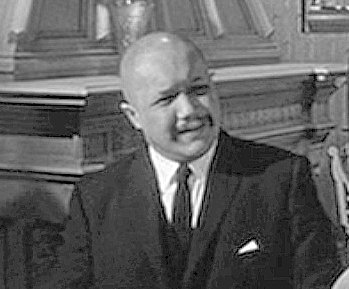
Khigh Dhiegh (Dr. Yen Lo)
James Edwards (Corporal Allen Melvin)
Plot
In 1952, during the Korean War, a group of American soldiers are abducted after an ambush. Among them are Raymond Shaw and his superior Bennet “Ben” Marco. When they come, they have forgotten what happened, but several of their comrades who were with them have lost their lives during the incident. The survivors return to the US and are welcomed as war heroes.
Raymond’s stepfather is Senator John Iselin, who presents himself as a staunch anti-communist. He and the young soldier’s mother, who is also heavily involved in politics, try to exploit Raymond’s return as a major patriotic event to promote themselves in the upcoming election campaign. Raymond never got along with his mother—and even less so with his stepfather. To spite them, he decides to take a job at a New York newspaper owned by a supposed communist sympathizer.
After returning from Korea, the veterans of the abducted detachment begin to suffer from distressing nightmares related to the time they were held captive by the enemy; a time they cannot remember while awake.
Shortly thereafter, Raymond’s boss at the newspaper dies under strange circumstances, and he takes his place.
Ben, his former superior, begins to realize that Raymond is being used: Everything indicates that he is the victim of a macabre psychiatric experiment that seeks to turn him into a killer…
Commentary
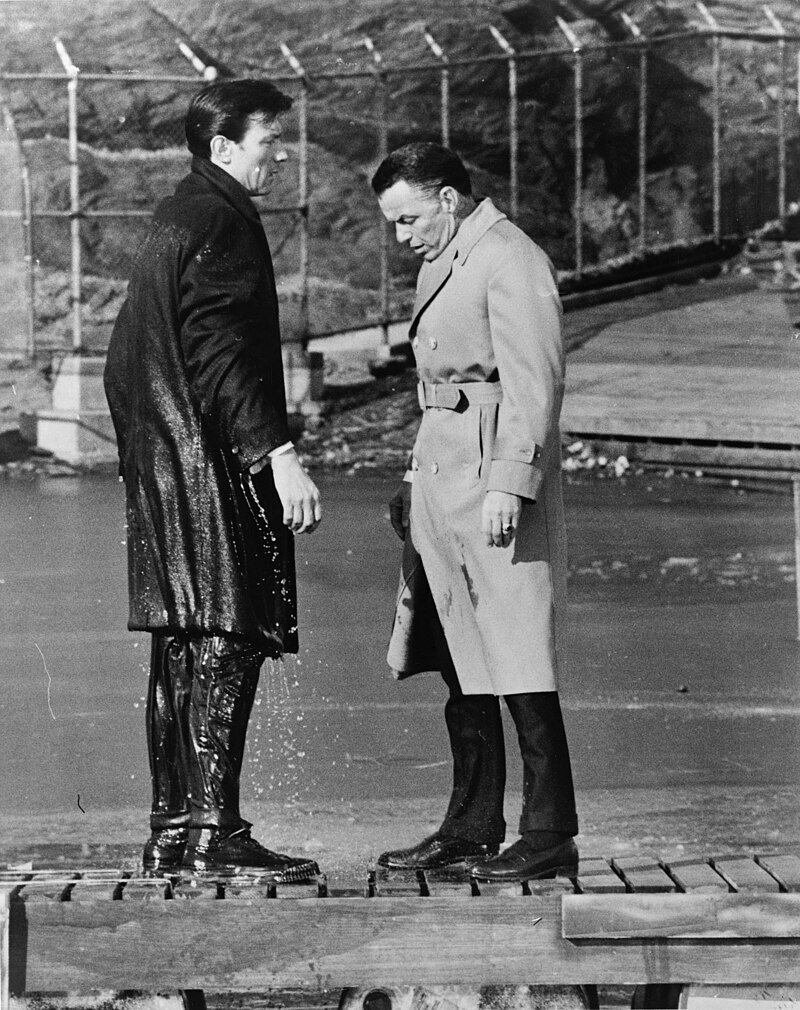
This masterpiece is considered an iconic film noir, a classic of intrigue and international espionage. But if we look deeper, it turns out to be much more than that: Frankenheimer’s “The Manchurian Candidate,” based on a novel and more recently remade, is a veritable manual showing how certain shady elements of the secret services act when pursuing their unspeakable goals.
The character of Raymond has been mentally programmed to become a disposable tool for his controllers. After sessions of hypnosis and brainwashing perpetrated during his capture by the enemy in Korea, the soldier will be capable of committing cold-blooded murders on command, and then remembering nothing. Throughout the film, we see elements of trauma control, so characteristic of the MK-Ultra program—a trauma that, incidentally, starts already in the family and did not begin with his capture in Korea. Among these elements of mind control are the “switches” that activate this automaton personality dissociated from the real Raymond. In this case, it is the card game solitaire, and especially the “queen of diamonds” card. There are also ‘trigger’ words and phone calls used to activate one or another facet of the “Manchurian.”
The nightmares of Ben and the other soldier who was held captive, Allen, are pieces of a puzzle where illusion and reality intermingle in the form of vague memories to warn of the genuine demonic possession of which the protagonist is a victim. The parallels between brainwashing, alleged alien abductions, and possessions commonly considered demonic are, to say the least, quite striking.
The climax of the film is the assassination attempt, which must take place “live,” against a presidential candidate. The film is from 1962, a year before Kennedy was killed. The home of the Iserin’s (Raymond’s mother and stepfather) is filled with portraits and busts of Lincoln (a president who was also assassinated)… The term “Manchurian candidate” has become popular in the context of political intrigue to refer to a kind of automaton deprived of free will who commits murders without being aware of his actions. A “Manchurian” cannot betray those who gave him the assignment, because through hypnotic or psychotronic mechanisms, his memory is erased by his controllers whenever they deem it appropriate. False “memories” can also be implanted in them, which, in addition to making them manageable puppets, makes them truly convinced of what they claim, no matter how false it may be. Interestingly, the department conducting this brainwashing experiment in Manchuria on Raymond and his comrades (a joint project between the Soviets and Chinese Communists) is called the Pavlovian Institute (named after Dr. Pavlov, the famous Russian scientist who applied conditioning methods to dogs).
But in addition to the most obvious plot, there is an even deeper reading of the film: if Raymond is used as a puppet, the same can also be said of the character of Iselin, his “patriotic and anti-communist” stepfather. The truth is that this individual, who acts like a drunken clown in his public appearances, seems to have been deliberately placed there by the country’s enemies to discredit true patriots and ultimately turn public sympathy toward the communists, that is, toward those he supposedly claims to be fighting. Raymond’s mother, and Iselin’s wife, is the one who really “wears the pants,” and as we shall see, her activism is not against the country’s enemies: in reality, she serves the country’s enemies, wearing the mask of a “patriotic and respectable” lady. Controlled dissent through and through: This is also known as entryism, the Trotskyist strategy of infiltration to demoralize and subvert.

It is curious that the card most associated with Raymond’s mind control, the queen of diamonds, has the letter “Q” (here for “queen”); and that several decades later a supposedly dissident movement represented by that letter emerged, the “Q-anon” (whose purpose, in addition to distracting and attracting the unwary into the orbit of the false messiah Trump, could be to discredit those with critical thinking as “conspiracy theorists”).
In addition to intrigue, the film offers us a fairly accurate picture of how psychological warfare works (Raymond’s microcosm and Iselin’s political campaign as a macrocosm), a truly cold (and silent) war, used to extend power and control by those elements that Kennedy himself denounced in a speech shortly before he was assassinated (see his “secret society speech” on video platforms).
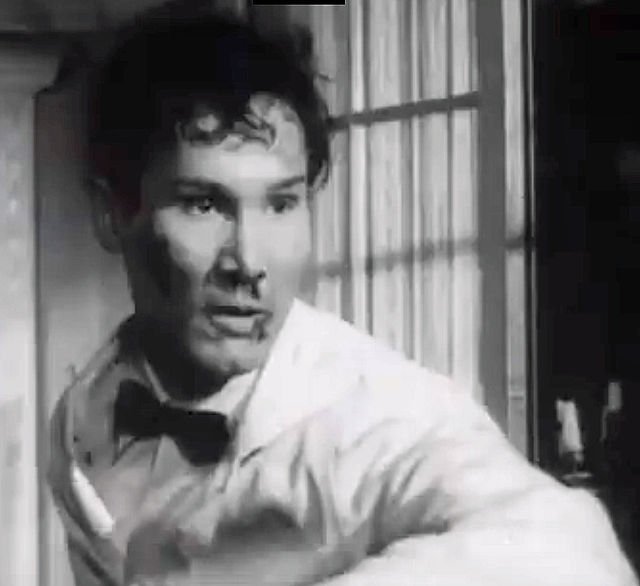
In the role of Bennet Marco, Raymond’s superior in the army who later realizes the tragic situation of his comrade and tries to help him, we have none other than “The Voice,” Frank Sinatra. Raymond’s mother, who in the film is a real witch, is played by Angela Lansbury, whom those of us who grew up in the 1990s remember as the endearing amateur detective Jessica Fletcher from “Murder, She Wrote.” In a supporting role, playing an Eastern agent (undercover as a butler in Raymond’s circle), we have a young Henry Silva, who in the following decade would stand out as a taciturn hitman in dozens of Italian crime films such as „The Italian Connection“ and „Il Boss“ (both by the great Fernando Di Leo).
Get The Manchurian Candidate HERE!
(This is an affiliate link. I may earn a commission if you purchase through these link, at no extra cost to you. As an Amazon Associate, I earn from qualifying purchases.)