
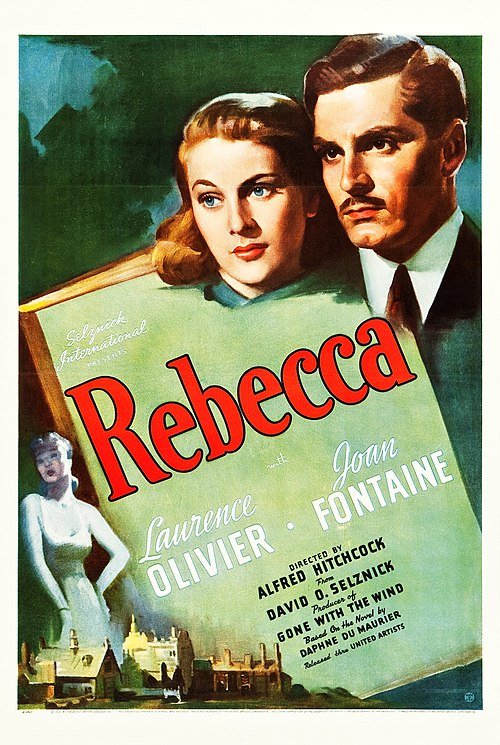
Rebecca
USA, 1940
Director: Alfred Hitchcock
Screenplay: Robert E. Sherwood and Joan Harrison, based on the novel by Daphne du Maurier.
Genre: Drama, suspense
Music: Franz Waxman.
Editing: Hal C. Kern.
Production: David O. Selznick.
Main cast:
Laurence Olivier (Maxim de Winter)
Joan Fontaine (The second Mrs. de Winter)
Judith Anderson (Mrs. Danvers)
George Sanders (Jack Favell)
Gladys Cooper (Beatrice Lacy)
Nigel Bruce (Giles Lacy)
Reginald Denny (Frank Crawley).
Florence Bates (Mrs. Van Hopper).
C. Aubrey Smith (Colonel Julyan)
Leonard Carey (Ben).
Plot
A young and attractive orphan works as a companion to a high society lady. While accompanying her to Monte Carlo, she meets the wealthy Maxim de Winter, a mysterious and charming man.
The melancholic and handsome millionaire now takes the girl under his wing, freeing her from the annoying Mrs. van Hopper. The young woman and the gentleman fall in love and very quickly get married, right there on the French coast during their vacation.
When they return to England, the girl, who is of more humble origins, is stunned upon arriving at Manderlay, her husband’s property: a gigantic castle staffed by an army of butlers and maids. The shy young woman, suddenly transformed into Mrs. de Winter, arouses the antipathy of the housekeeper, Mrs. Danvers. The castle, which is so huge that it is easy to get lost in, hides many mysteries. And Maxim, its owner, also hides a dark past.
For the sweet and innocent girl he has just married is not his first wife. Maxim de Winter is still haunted by the memory of his previous marriage to the late Rebecca…
Commentary
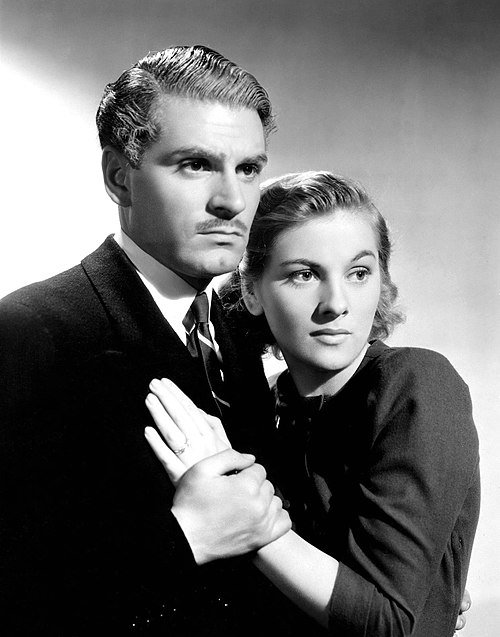
This film by the master Hitchcock, his debut in the US, successfully combines the suspense characteristic of his filmography with a convoluted romance worthy of a soap opera. All this takes place within the framework of a murky drama from beyond the grave. The ghosts of the past haunt the aristocratic Maxim de Winter, as well as his new, angelic young wife. One of the peculiarities of the film is that the protagonist, played by Joan Fontaine, has no name. At no point are we told the name of the girl, who takes on a role in the story quite similar to that of Cinderella. However, the name of her predecessor and invisible antagonist, Rebecca, is mentioned countless times and her figure is so omnipresent that she even gives the film its title.
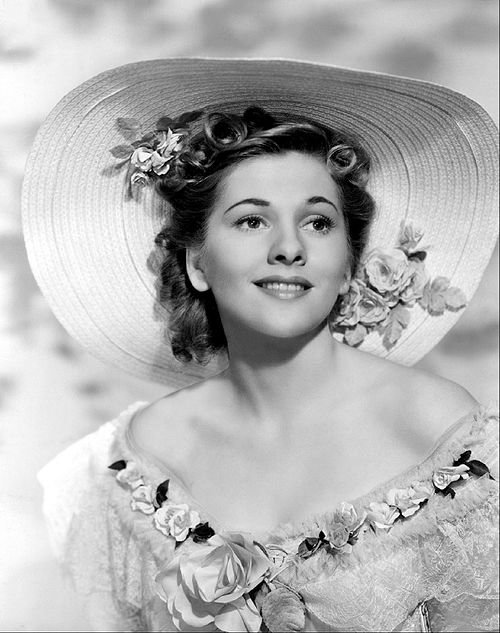
The young woman, who seems helpless and overwhelmed by her sudden position as the new “Mrs. de Winter,” feels like a second fiddle and is pushed to be jealous of a dead woman. The deceased awakens in the withdrawn girl the desire to compete with her, so that others (especially Maxim) will finally forget Rebecca. But although Rebecca is no longer physically present, she is at the same time more present than ever. Her memory haunts everyone who knew her, from her husband to the eccentric Ben, the old man who lurks around the abandoned house on the beach (where Rebecca used to meet her cousin and lover)…
The housekeeper, Mrs. Danvers, also cannot forget her idolized mistress, for whom she shows an exaggerated devotion, displaying a fetishistic cult toward her (not without a certain lesbian subtext).
Little by little, details about Rebecca’s death—who drowned in a supposed water accident—are revealed. What begins as a light romance with comical touches takes the form of a detective thriller with a supernatural aura.
In several scenes, there is a display of occult symbolism: for example, the obelisk-shaped decorations on the stairs are striking. Another curious detail is the room of the deceased Rebecca, which has been closed since her death: the first time this room is mentioned (by the housekeeper), we see a black dog in front of the closed door, evoking associations with Anubis, the Egyptian god of the dead, or Cerberus, who guards the gates of Hades. There is also a secondary character, a friend of Maxim’s, whose surname is Crawley (a variant of Crowley, the surname of the famous occultist). Frank Crawley is a kind of real estate agent who manages the Manderley estate, including the castle, and Aleister Crowley (who, by the way, was still alive when the film was released) was a great lover of castles and mansions like the one we see in the film (he bought Boleskine in Scotland, next to Loch Ness).
From the moment they arrive at the castle, the film is imbued with a gothic and dreamlike atmosphere. Different timelines seem to intertwine, through the energy of memories and the influence of the disembodied.
The plot is based on the novel of the same name by Daphne Du Maurier, author of crime and mystery novels who, among many other works, wrote The Birds—also brought to the big screen by Hitchcock a couple of decades later.
Get Rebecca HERE!
(This is an affiliate link. I may earn a commission if you purchase through these link, at no extra cost to you. As an Amazon Associate, I earn from qualifying purchases.)