
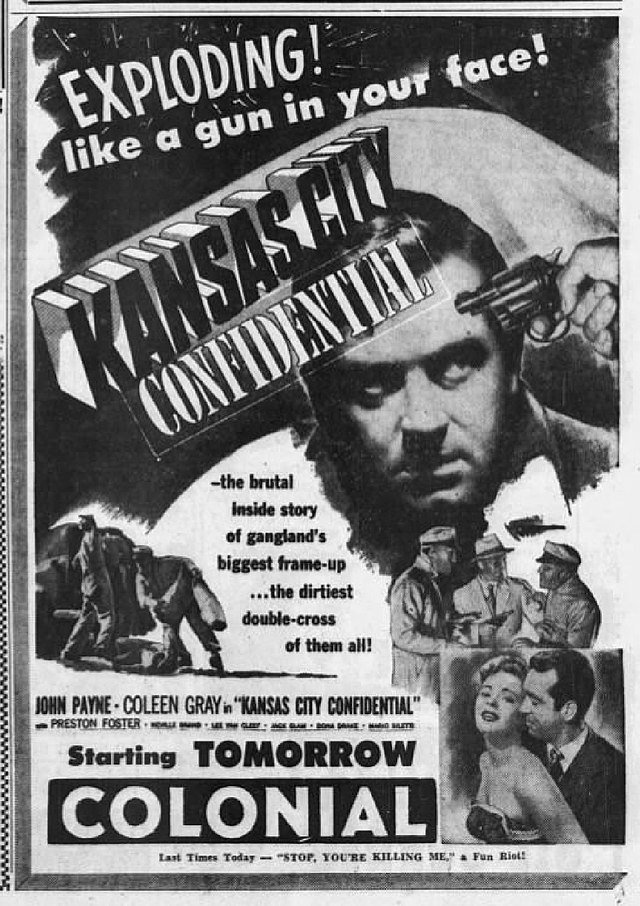
Kansas City Confidential
USA, 1952
Director: Phil Karlson
Screenplay: Rowland Brown, George Bruce, Harry Essex, Phil Karlson, John Payne
Genre: Film noir
Editing: George Crone
Production: United Artists
Main cast:
John Payne (Joe Rolfe)
Coleen Gray (Helen Foster)
Preston Foster (Tim Foster)
Neville Brand (Boyd Kane)
Jack Elam (Pete Harris)
Lee Van Cleef (Tony Romano)
Dona Drake (Teresa)
Mario Siletti (Pietro)
Plot
A mysterious guy organizes a bank robbery in Kansas. To do so, he has hired three professional criminals: Pete, Tony, and Boyd.
They do not know each other. Wearing a mask, the boss who has planned the heist keeps his identity secret and also insists that the three cover their faces during the job. They must not even know what each other looks like.
For the robbery, they use a truck belonging to a flower delivery company, as there is a flower shop next to the bank where a truck from that company arrives at the same time every day.
The robbery goes off without a hitch. The robbers, who change vehicles, make a successful getaway. But when they split up (each must get out at a different place, to prevent them from recognizing each other and giving themselves away), the leader gives them only a small part of the loot, promising them the rest later…
Meanwhile, the police arrest Joe, the florist’s delivery driver, because he was driving a truck identical to the one used in the robbery and was on the street where the robbery took place at almost the same time, making him the prime suspect.
The police try to get him to confess so they can close the case as soon as possible. But the honest delivery man stubbornly insists on his innocence. When the authorities are forced to release him, Joe decides to investigate on his own. He thinks he has been the victim of a set-up designed to incriminate him and wants to know who is behind…
Commentary
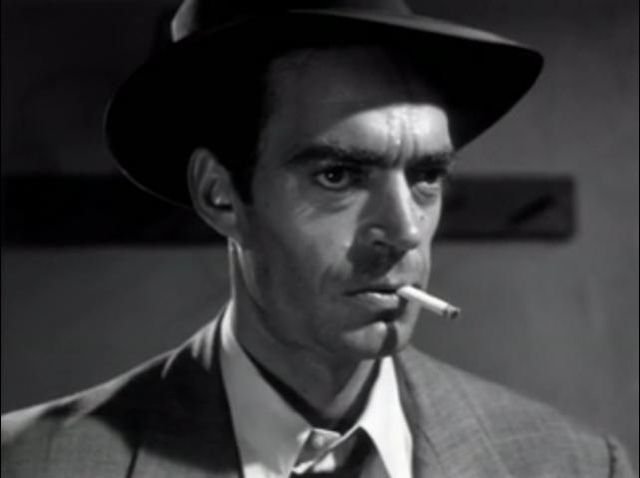
This excellent film noir delights us with the story of a near-perfect crime. And with the struggle of a man, unjustly accused of it, to clear his name. In this respect, the film has some parallels (especially at the beginning) with the masterful “I Am a Fugitive…” (Mervyn Le Roy, 1932), previously reviewed.
Joe had a past connection with the underworld, but he has managed to reform himself and now works honestly. Disgusted by the actions of the official investigators of the case, who are trying to lock him up without evidence, he takes it upon himself to clarify the facts.
The investigation takes him from Kansas to a hotel in Tijuana, where the boss, a certain “Mr. Big,” has summoned the three robbers to supposedly divide up the rest of the loot. However, Joe’s interference will thwart the plans of the mysterious organizer of the heist…
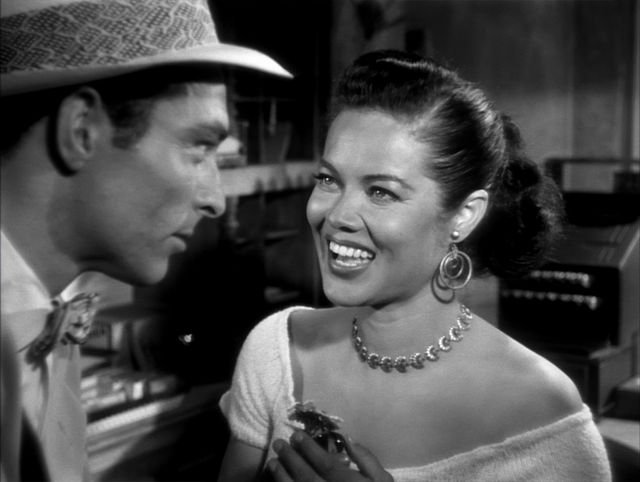
Intrigue and suspense are two narrative techniques used to generate tension from different perspectives: in intrigue, the viewer knows less than the characters, while in suspense, it is the characters who are unaware of important information that the viewer knows. In Kansas City Confidential, suspense reigns from the very first minute. From the outset, we know who is behind everything and who the three accomplices are that he has chosen for this purpose. But the trio do not know each other, nor does the protagonist Joe, the hero seeking justice, know what or who he is up against. The viewer is omniscient, but this does not diminish the interest, as the tension is constant—and even increases as the film progresses. In addition, we gradually discover details about the background of the mysterious “boss” who has organized everything, and what he really intends to achieve with this cunning coup, which has been meticulously prepared without leaving anything to chance. And speaking of “chance,” the symbolic detail of the torn poker cards (which the trio of robbers use to identify themselves) is striking.
Although we know who “Mr. Big” is, none of those involved know his identity. In the context of the events, he represents the “invisible superior” who controls crime from the shadows, the hidden power. His motivations are to exercise control and obtain wealth, always using manipulation. And all with impunity. But his “perfect” plan has cracks…
The premise of masked robbers participating in a heist without knowing each other would be adopted decades later by Quentin Tarantino in his directorial debut with “Reservoir Dogs” (1992).
Joe’s character is admirable for his poise, fortitude, and cold-bloodedness. He is played by John Payne, an actor much less well known than his almost namesake colleague John Wayne. In the role of Tony Romano, one of the professional criminals recruited for the heist, we have a young Lee Van Cleef (a face that would later achieve international fame thanks to Sergio Leone’s Italian Westerns).
Felix Hahlbrock Ponce
(Get my books HERE)
Get Kansas City Confidential HERE!
(This is an affiliate link. I may earn a commission if you purchase through these link, at no extra cost to you. As an Amazon Associate, I earn from qualifying purchases.)