
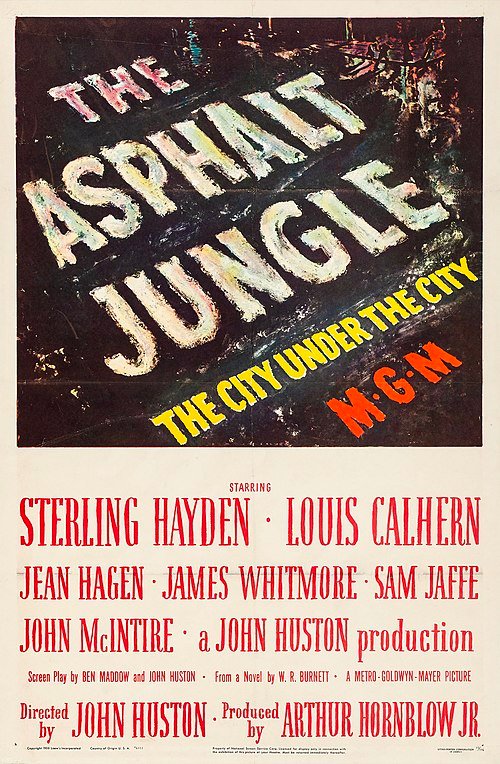
The Asphalt Jungle
USA, 1950
Director: John Huston
USA, 1950
Director: John Huston
Screenplay: John Huston, Ben Maddow
Genre: Film noir
Soundtrack: Miklós Rózsa
Editing: George Boemler
Production: Universal Pictures
Cast:
Sterling Hayden (Doc Riedenschneider)
Marilyn Monroe (Angela Phinlay)
James Whitmore (Lt. Riley)
Barbara Stanwyck (Dixie)
Sam Jaffe (Capt. Gaetano)
Louis Calhern (Dillon)
Plot
A cunning criminal mastermind, the German Dr. Riedenschneider, has just been released from prison after spending seven years behind bars. During that time, he has devised a master plan to get his hands on a lucrative haul of precious stones. But he is merely an “ideologist,” and he needs men of action to carry out his plan. To that end, he turns to Cobby, a gangster who normally works in the gambling business but has many contacts…
Doc will also need contacts to turn the gems into cold, hard cash. Cobby can help with that, too; he’s a partner of the shady lawyer Emmerich, who has plenty of connections in both the underworld and the “respectable” world…
The Doc and Cobby begin recruiting candidates for the job. One of them will be Dix, a criminal not quite accustomed to the big city, of rustic, farm-boy origins.
Meanwhile, Emmerich conspires behind their backs and hatches his own plan…
Commentary
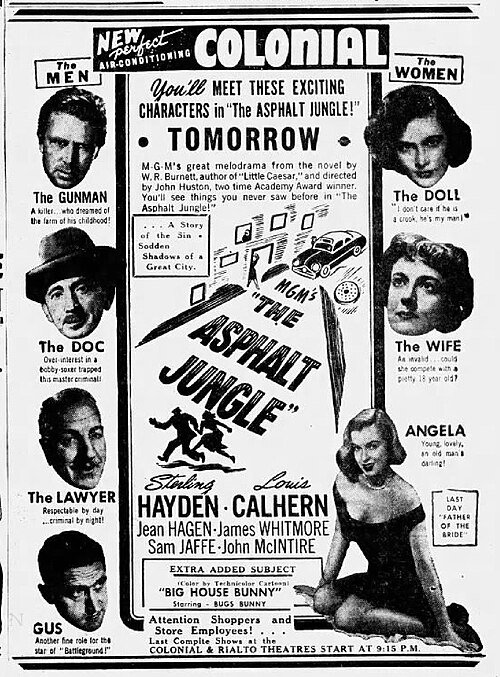
This magnificent film noir classic shows us that loyalties within the shady world of the underworld are a very fragile thing. And no matter how good a plan may be, unforeseen events can always arise…
We’ll see that pulling off the heist isn’t as complicated as dealing with the problems that arise afterward. Partly due to Emmerich’s betrayal, and partly because the police have been suspicious of them from the very beginning. They’re wanted by the police and are forced to go into hiding. Furthermore, the police are investigating not only the robbery, but also a related murder…
The structure of the gang is held together by the figure of Cobby, who symbolically represents a bookie in the underworld—an expert in games of chance. And in the heist orchestrated by the meticulous Doc, even though he tried to plan everything down to the last detail, Lady Luck has the final say—in this regard, the plot bears strong similarities to the equally outstanding “The Killing” (Stanley Kubrick, 1956).
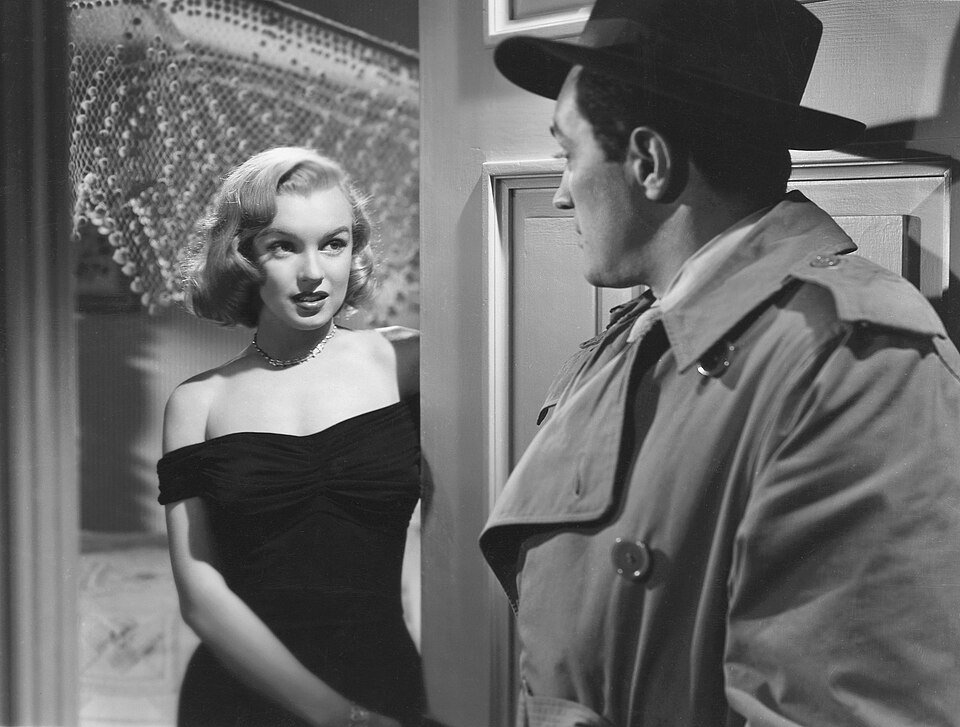
The “big boss” Emmerich, who officially works as a lawyer, is a giant with feet of clay; he admits he is on the brink of ruin. And he deceives not only his partners but also his wife: he is the “sugar daddy” of the sweet young Angela, played by Marilyn Monroe. In general, we can observe a reversal of values in the hierarchy among those involved in the heist: for those who seem the most powerful, those at the top of the pyramid, are not necessarily the most capable; rather, they are the most servile and cowardly. The Doc is very intelligent and also loyal, but he is undone by his extravagance and, above all, his weakness for women (what we would call today simping). The toughest, most battle-hardened, and honorable (within the gangster context) is precisely the one with the most rustic and humble background; the farmer who wants to leave the gray “concrete jungle” and return to his family’s ranch in Kentucky.
While Emmerich embodies the archetype of the corrupt lawyer who moonlights as a crime boss, Officer Dietrich represents police corruption, seeking to profit from shady deals by playing both sides of the law. Yet, somewhat paradoxically, it is precisely this corrupt officer who sets events in motion, ultimately leading to the resolution of the case.
We also have the character of the seasoned Commissioner Hardy, who, after unmasking Dietrich and having him arrested, declares at a press conference that the existence of such corrupt police officers cannot tarnish the institution itself, which works to maintain order in that “concrete jungle.” Hardy can be considered Dix’s counterpart but within the legal system. For both agree that the great cities of the modern world have become a malevolent chaos that threatens the natural order.
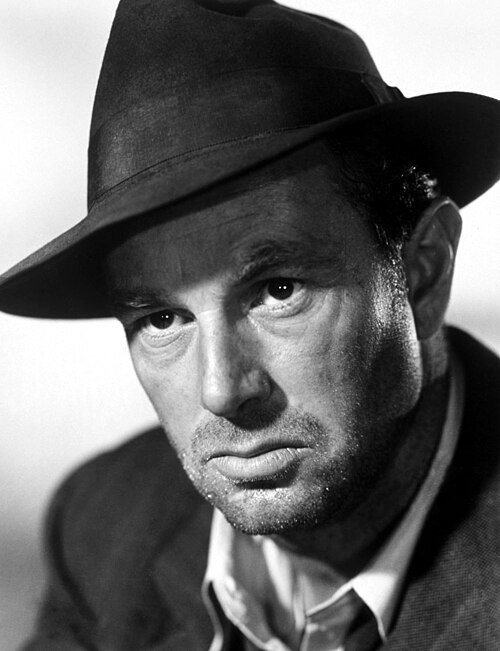
Dix, played by Sterling Hayden (who collaborated with Kubrick on the aforementioned “The Killing” as well as “Dr. Strangelove”), never adapted to “civilized” life (city life). In terms of his background, stoicism, motivations, and outlook on life, he is very reminiscent of the character played by Humphrey Bogart in “High Sierra” (Raoul Walsh, 1941). While Dr. Riedenschneider, who comes from Europe, dreams of escaping to exotic Mexico and living the high life there with attractive women and luxury, Dix simply wants to leave the hustle and bustle of the big city behind and return to his roots.
Dr. Riedenschneider is played by Sam Jaffe, a Jewish New York actor from the Yiddish theater, whom director John Huston had known since his youth, as the two had shared an apartment in Greenwich Village. Among his friends from that era was also the dystopian science fiction writer Ray Bradbury—who would inspire several of the “Historias para no dormir” (Spanish mistery series from the ’60 and ’70) by the great Narciso Ibáñez Serrador. It is curious that Jaffe’s character in this film is a jewel thief, considering that his father in real life was a jeweler by profession (as can be read on Wikipedia).
Both Jaffe and Sterling Hayden would be investigated for their communist sympathies in the 1950s, which had just begun when this film was released.
Felix Hahlbrock Ponce
(Get my books HERE)