
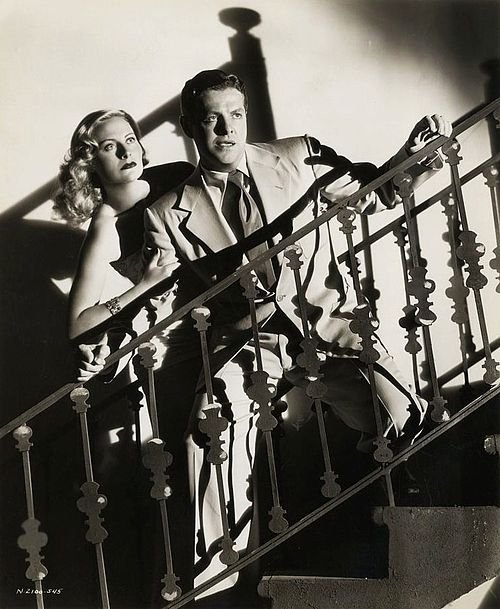
The Chase
USA, 1946
Director: Arthur Ripley
Screenplay: Philip Yordan
Genre: Film noir
Soundtrack: Miklós Rózsa
Editing: George Boemler
Production: Universal Pictures
Cast:
Robert Cummings (Chuck Scott)
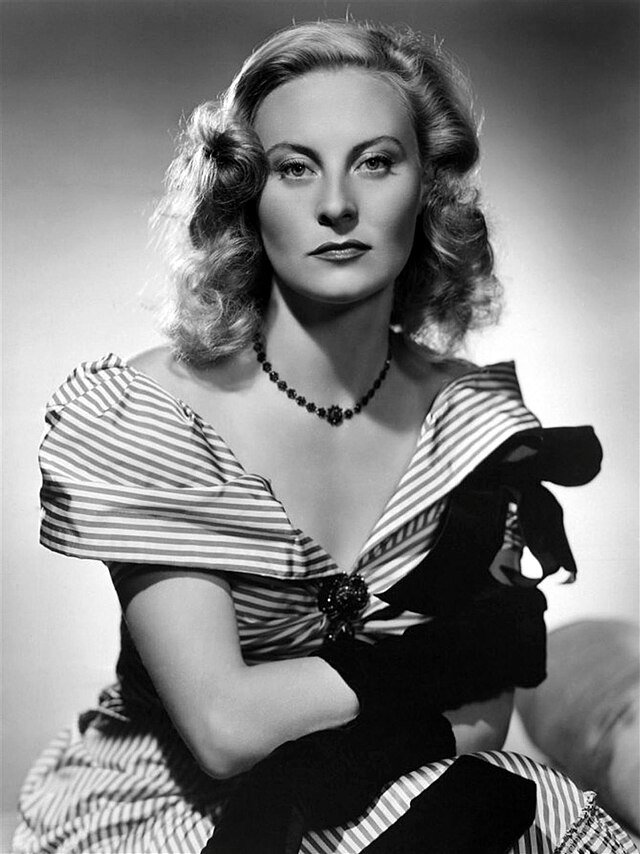
Michèle Morgan (Lorna)
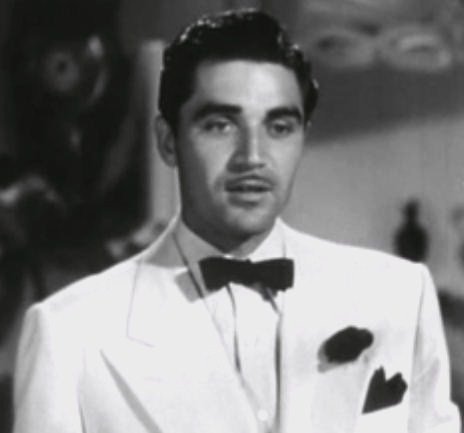
Steve Cochran (Eddie Roman)
Peter Lorre (Gino)
Plot
Chuck Scott is a young veteran of the recently ended World War II. He lives in Miami, is unemployed, and has very few resources. One day, he finds a wallet full of cash on the street. Inside, there is also a card with the owner’s name. Chuck is poor but honest, so he goes to return it to the address on the card. This leads him to the luxurious mansion of the wallet’s owner, a man named Eddie Roman. Roman turns out to be a dangerous, unscrupulous gangster.
Roman and his hitman Gino mock Scottie’s honesty. But they decide to hire him as a chauffeur.
Johnson, a shipbuilding businessman who is hindering Roman’s business dealings, is found “committed suicide” after a meeting with the gangster.
Lorna, Roman’s unhappy wife, feels trapped in the marriage. Her greatest dream is to escape her terrible husband. She takes a liking to the good-natured Scottie and asks him to take her to Havana for $1,000, just to get away from Roman.
Scottie agrees, but Roman is no fool and begins to suspect that his new driver and his voluptuous blonde wife are plotting something behind his back…
Comment
An excellent yet little-known film noir, shot on a low budget and set in Miami and Cuba immediately after World War II.
We have a predictable yet fleeting romance with an unpredictable and abrupt ending—or so it seems at first… A tragic crime turns the protagonist into a man unjustly hunted by the Cuban authorities. It’s worth noting the historical context: The film subtly uses this to make a statement against the Cuban government of the time. We see how the agents behave in an arbitrary and tyrannical manner; the inspector openly tells Chuck that they’re only going easy on him because he’s a foreigner—it’s implied that if he were just another Cuban, they’d send him straight to jail. The agents behave arrogantly toward ordinary people; the girl who is “in quarantine for smallpox” helps the protagonist hide because she “hates the police”…
It’s clear that the filmmakers sought to portray the Cuban government in a negative light… In 1946, the president was Ramón Grau, who had maintained a tense relationship with the United States since his first term in the 1930s. Among other things, this was due to his opposition to the “Platt Amendment,” which allowed for U.S. interventionism. He also promoted economic sovereignty, suspended foreign debt (for example, with Chase Bank in New York), and achieved this while maintaining an anti-communist stance. For this reason, he did not enjoy the sympathy of international “public opinion,” which routinely accused him of “corruption,” “repression,” etc. Meanwhile, a certain Fidel Castro was emerging among the opposition leaders… This figure’s movement (which developed during Batista’s subsequent dictatorship) enjoyed not only Soviet support but, at first, also a great deal of publicity (as a “romantic guerrilla”) and favorable media coverage from the U.S., which helped pave the way for the bearded rebels… – Controlled dissent? Draw your own conclusions.
Be that as it may, the film shows us a flight from Miami to Cuba. About 15 years later, a reverse exodus would begin to take place…
Back to the movie: As far as the plot is concerned, there are several surprises in store. Not everything is what it seems; dreamlike plot twists blur the lines between reality and fiction. With the arrival of the senior military doctor, we see that Chuck is suffering from post-traumatic stress (being a war veteran). He retains only vague memories of recent events, has an altered perception of reality, amnesia, hallucinations, memory lapses… Could our protagonist be a precursor to the famous “Manchurian Candidate”?
As for the dynamics of relationships, there are parallels with “Gilda” (which is from the same year, 1946) and with “Scarface” (both the 1983 version and the original from 1932)—in all these films, we find that a gangster’s new employee ends up seducing his boss’s wife. And by the way, just as with Rita Hayworth’s famous character, Lorna is both a femme fatale and a victim. Just as “Gilda” is set in Argentina but was filmed in Hollywood, the same is true of the scenes in this film that take place in Cuba.
It’s interesting to see the Chinese shop in 1940s Cuba; and the symbolism of the jade dagger with the monkey figures (the famous monkeys that see no evil, speak no evil, and hear no evil… a bit like the “Chinese woman” who sells them…)
There are also some scenes of great interest due to their meta-narrative nature. About halfway through the film, when it seems that Chuck has escaped with Lorna, Gino asks Eddy, “So what are we going to do now?” Eddy, who is listening to music on his record player, simply replies apathetically, “Play the other side” (in this context, “flip the record over”; “put it on the other side”). Then begins the second phase of the film, set “in Cuba”—and in our protagonist’s dreams, though it’s not entirely clear exactly when they begin.
Among the actors, Peter Lorre stands out as the fearsome hitman Gino (in a role very different from the one he played in “The Maltese Falcon”).
We have timelines that seem to converge, patterns and situations that repeat themselves. And as this fascinating film illustrates, there are dreams that, in Cuba, can come true…
Felix Hahlbrock Ponce
(Get my books HERE)
Get The Chase HERE!
(This is an affiliate link. I may earn a commission if you purchase through these link, at no extra cost to you. As an Amazon Associate, I earn from qualifying purchases.)