
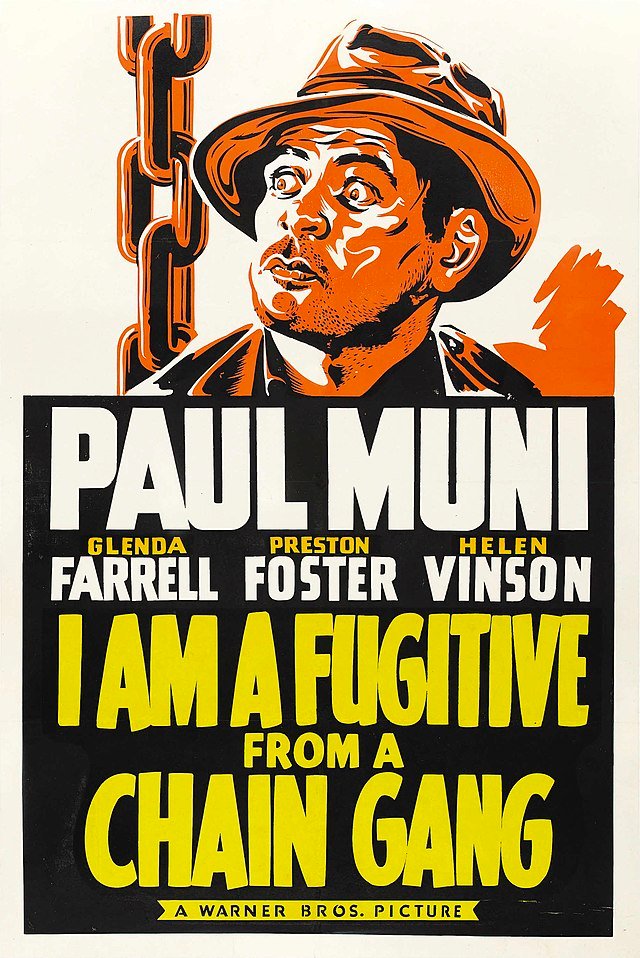
I Am a Fugitive from a Chain Gang
USA, 1932
Director: Mervyn Le Roy
Screenwriters: Howard J. Green, Brown Holmes, based on the autobiography by Robert E. Burns
Genre: Prison drama
Soundtrack composer: Bernhard Kaun
Editing: Ray Curtiss
Production: Warner Bros.
Main cast
Paul Muni (James Allen)
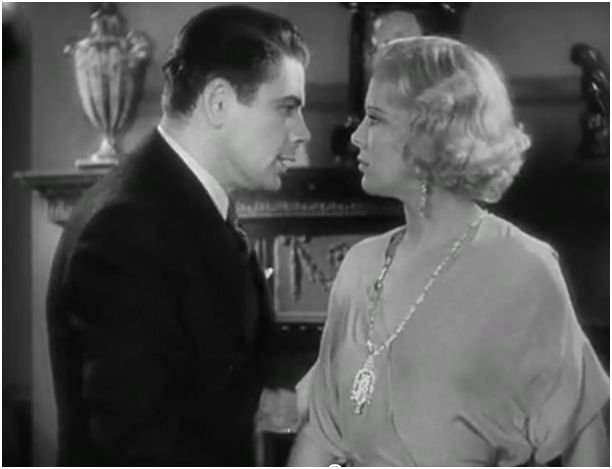
Glenda Farrell (Marie)
Helen Vinson (Helen)
Plot
James Allen returns to the USA after serving as a soldier in World War I. Waiting for him there are his mother, his older brother who is a priest, and a secure job in a factory. But it is a routine, boring job with few opportunities for advancement. James is more ambitious and adventurous. He decides to set out in search of fortune across the country, aspiring to become an engineer and design bridges and roads. But no one will hire him. His savings are dwindling.
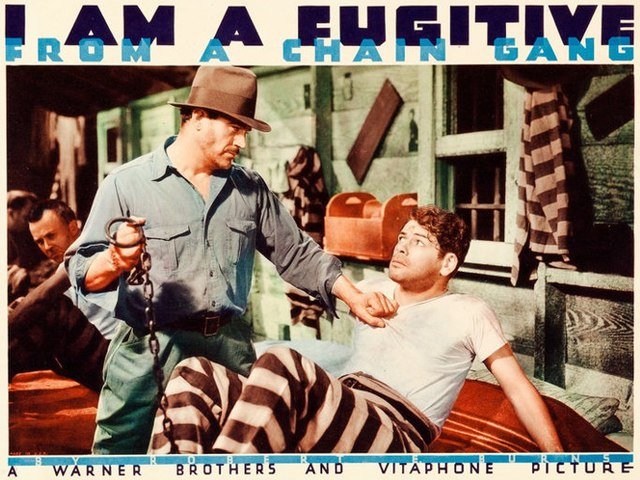
One day, he has the misfortune of being in the wrong place at the wrong time. A robbery has taken place and he is found guilty. He is sentenced to ten years of hard labor. James is sent to a prison (which looks more like a concentration camp) where a brutal, inhumane prison regime is enforced. Now, his main goal is to escape. And when the right opportunity arises, he doesn’t hesitate to take it…
Commentary
This masterpiece, starring Paul Muni, an actor best known for playing the first Scarface, is a very pleasant surprise.
It can be considered a pioneer of the prison genre, a theme that would be explored extensively in cinema in the following decades, with The Shawshank Redemption (Frank Darabont, 1994) being one of the most famous examples.
This is not a gangster movie (as the title might suggest), and it is much more than a conventional prison drama. It is rather the story of a man who is constantly trying to escape. Not only from prison, when he is there… But also BEFORE (from his monotonous life, in the family home and in his boring job at the factory); and also AFTER, when he has become a successful man – for the prison of chains and bars is followed by a new prison: that of marriage to a bad woman who blackmails him.
From the beginning, we see that war (and more generally, conflict and combat) has awakened in the protagonist a desire to better himself, to become independent from his mother’s lap, and also to leave behind the routine life “programmed” for him, as recommended by his brother, the priest – a representative of the priestly caste, and promoter of docility, meekness, and turning the other cheek. But that doesn’t suit the protagonist, who, with his way of life, embraces the Latin aphorism Per aspera ad astra (“Through hardship to the stars,” meaning that triumph is achieved through effort).
The film hooks you from the very beginning, the story manages to keep the viewer’s interest more than alive, there is plenty of excellent dialogue, some very good moments of tension, and it is easy to identify with the bold and troubled protagonist. All of this is hugely commendable, considering that this is a feature film shot more than 90 years ago (!). Furthermore, despite the sometimes sordid subject, the film is fresh and entertaining. For all these reasons, in my opinion, „Chain Gang“ is superior to the first Scarface, which was also filmed in 1932 and also stars Paul Muni.
The main theme of the film is escape. Prison can be interpreted as a metaphor for something deeper. The real protagonist is not the individual “James Allen” but the desire for freedom of a restless spirit, an explorer, eager for conquest. At first, this desire for freedom will paradoxically lead him to the harshest prison, with a regime of forced labor similar to that of a gulag. The protagonist is already hardened, having fought in a war. In fact, it was his life as a soldier that awakened in him the desire to escape the monotony of life in his mother’s house. The prison system will toughen him up even more, but without breaking him. However, even if James escapes from prison, he will remain chained to several factors that prevent him from being truly free…
The film is not only entertaining, but also offers a deeper reading and is extremely interesting on several levels. To use somewhat symbolic and somewhat cryptic language, we could say that “on the other side of the mirror” of that restless and exploratory spirit mentioned above is the eternal fugitive (and a fugitive is alluded to in the film’s title). The protagonist pursues his goals and flees from the system. In other words, he pursues and flees at the same time.
In this context, which may seem ambiguous, it is striking that, after escaping from prison and being wanted by the authorities, he “changes his name”: he goes from being called “James Allen” to being called “Allen James”: a phenomenon of inversion.
Much more obvious is the content of social criticism: both of the judicial system, which puts innocent people in prison, and of the prison system with its forced labor, something that was still in place at the time. And we see how dangerous it is for the protagonist to make these criticisms—which are considered by the powerful as an attack on the system as a whole (a system in which the protagonist himself had managed to prosper). James realizes his naivety in trusting the state, and the story has an almost cyclical structure, where patterns repeat themselves (returning to “hell,” escaping again… always being a “fugitive”…).
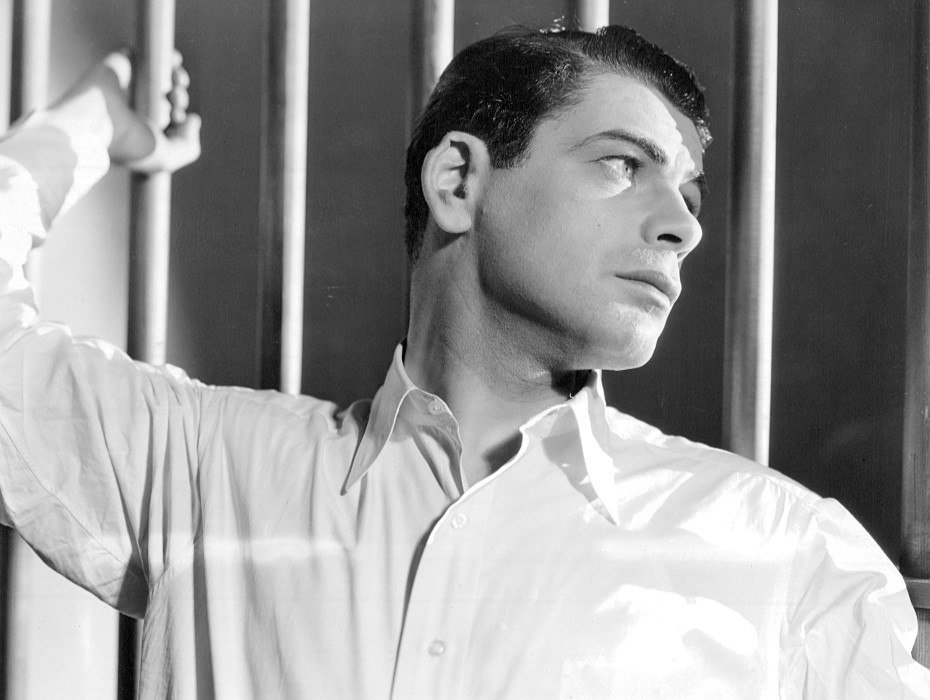
The fact that James has a vocation for designing bridges is also striking on a symbolic level. And he is not only a builder of bridges (a “pontifex”), for as we shall see, he can also destroy them if circumstances so require. Bridges, among other things, represent the link between the material and the spiritual, between the mundane and the divine, between the tangible and the occult.
Given its highly symbolic content and rich allegories, it is curious that the story is based on real events. The screenwriters drew inspiration from the autobiographical book by Robert Elliot Burns, a World War I veteran who was unjustly sentenced to prison and denounced his hellish prison experience in “I am a fugitive from a Georgia Chain Gang!”, also published in 1932. The term “gang” in this case has nothing to do with a gang of gangsters, but refers to groups of prisoners who had to perform hard labor with their feet chained, and sometimes chained together.
The film was directed by Mervyn LeRoy, who had previously filmed the gangster classic “Little Caesar” (1931) and would later make the epic “Quo Vadis” (1951), as well as the highly recommended “Bad Seed” (1956), reminiscent of Hitchcock.
Felix Hahlbrock Ponce
(Get my books HERE)