
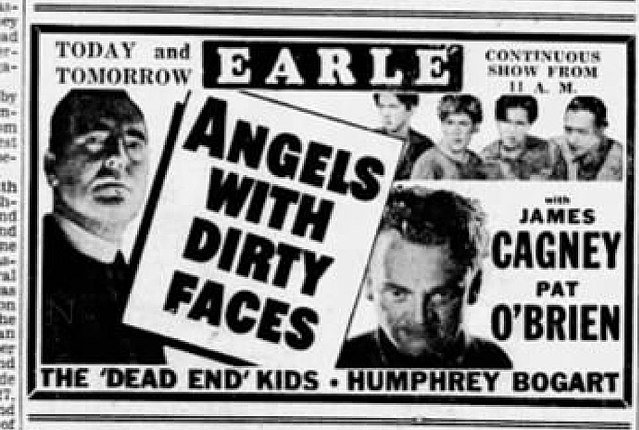
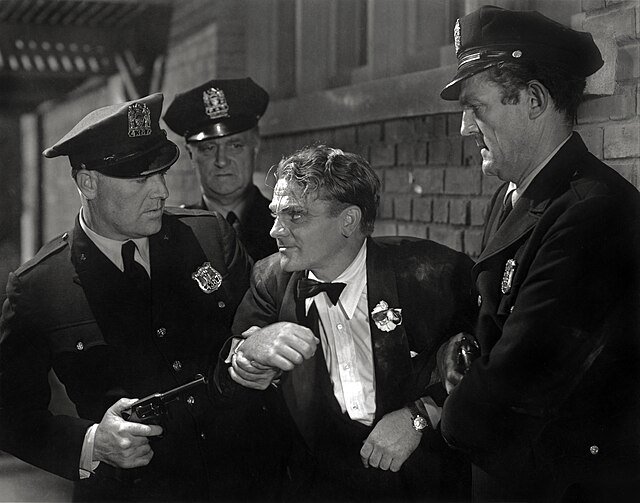
Angels with Dirty Faces
USA, 1938
Director: Michael Curtiz
Screenwriters: John Wexley, Warren Duff
Genre: Gangsters, Drama
Soundtrack composer: Max Steiner
Editing: Owen Marks
Production: Samuel Bischoff
Cast:
James Cagney (Rocky Sullivan)
Pat O’Brien (Jerry Connolly)
Humphrey Bogart (James Frazier)
Ann Sheridan (Laury Martin)
George Bancroft (Prison Warden)
The Dead End Kids: Billy Halop (Soapy), Bobby Jordan (Swing), Leo Gorcey (Bim), Gabriel Dell (Patsy), Huntz Hall (Crab), Bernard Punsly (Hunky)
Plot
In 1920, Rocky Sullivan and Jerry Connolly are two Irish boys in New York. Raised in a dangerous neighborhood where crime runs rampant, they try to commit a robbery but are caught by the police. Jerry manages to escape, but Rocky is arrested and ends up in reform school. He never betrays his friend.
During Prohibition, Rocky becomes a famous gangster who is in and out of prison many times, and whose exploits regularly appear in the newspapers. Jerry, on the other hand, has become the parish priest of the neighborhood. He tries to prevent the local boys from falling into crime, and to this end he has decided to set up a sports center in the neighborhood.
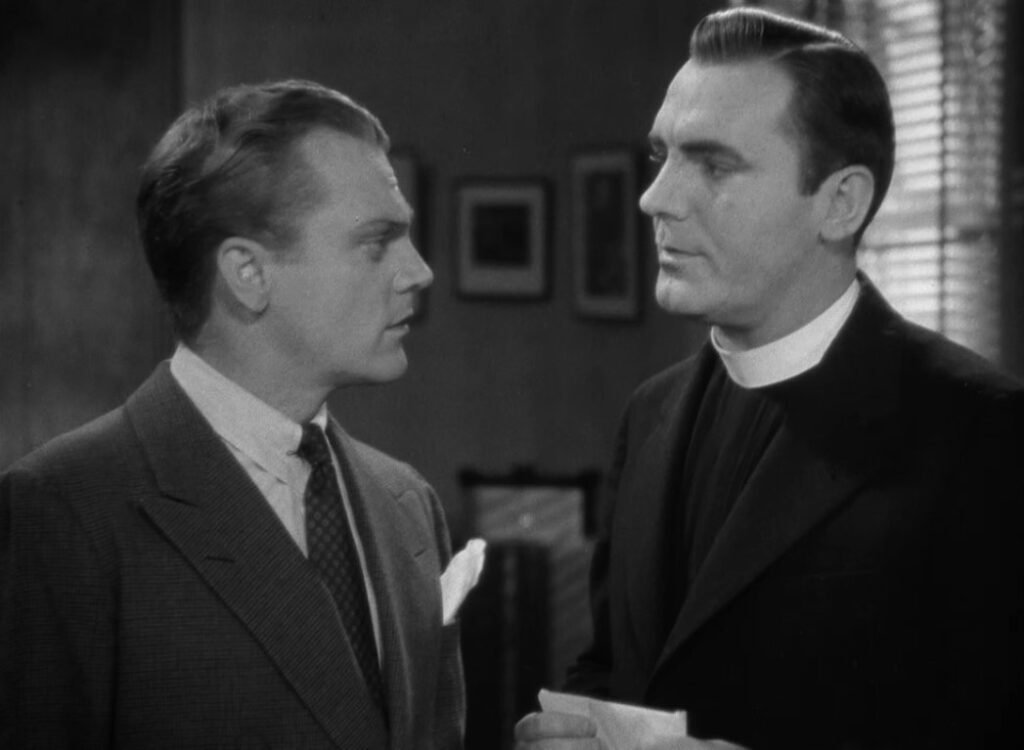
About fifteen years after they committed the robbery, Rocky goes to church to visit Jerry. Despite the huge differences between the paths they have chosen in life, they continue their old friendship. Jerry is confident that Rocky still has time to give up crime.
But Rocky still has scores to settle in the underworld. Specifically with his lawyer, Jim Frazier. Frazier never paid him his share of a lucrative deal, and Rocky feels cheated. Frazier is a very powerful man with political connections and important associates. Noticing that Rocky keeps insisting and pestering him, he decides to hire some thugs to get rid of him. But he soon realizes that Rocky is a tough nut to crack…
Meanwhile, Rocky, who lives in a humble boarding house in the same neighborhood where he grew up, starts dating a girl he knew from childhood and befriends the neighborhood boys, Soapy and his gang. Like him and Jerry in their day, they are street thugs. The teenagers begin to idolize Rocky, seeing him as a mentor figure. But that is precisely what Jerry is trying to avoid: that they get carried away by the lifestyle and bad influences of the gangsters…
Commentary
This great classic of gangster cinema is probably one of the pioneering films to address the issue of juvenile delinquency. And it does so from the perspective of two generations. The central theme of the story is young people’s need for a father figure to guide and mentor them.
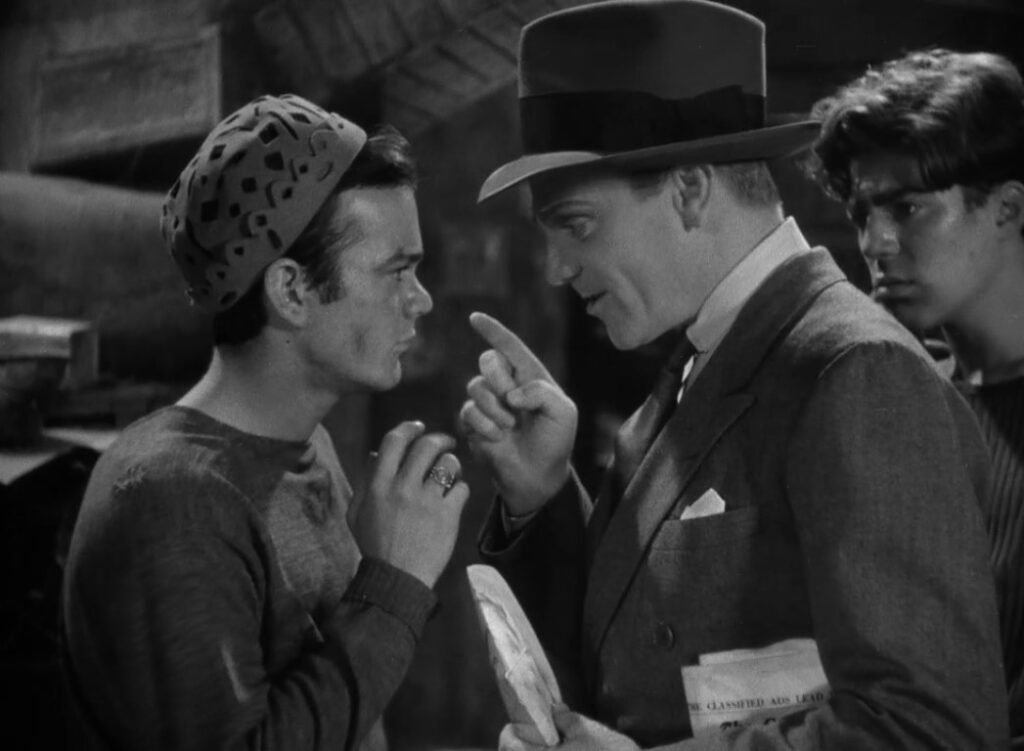
And the street kids, these “angels with dirty faces” referred to in the title, have two diametrically opposed mentors before them. On the one hand, there is Father Jerry, who tries to integrate them into society and turn them into decent citizens, and on the other, there is the bandit Rocky, who always rewards them generously in exchange for favors and jobs (but on the wrong side of the law). The boys, attracted by danger, adventure, and quick money, soon begin to idolize the latter, much to the priest’s dismay. Even so, and despite their many differences, the two rival mentors continue to consider each other close friends, as they share the same background.
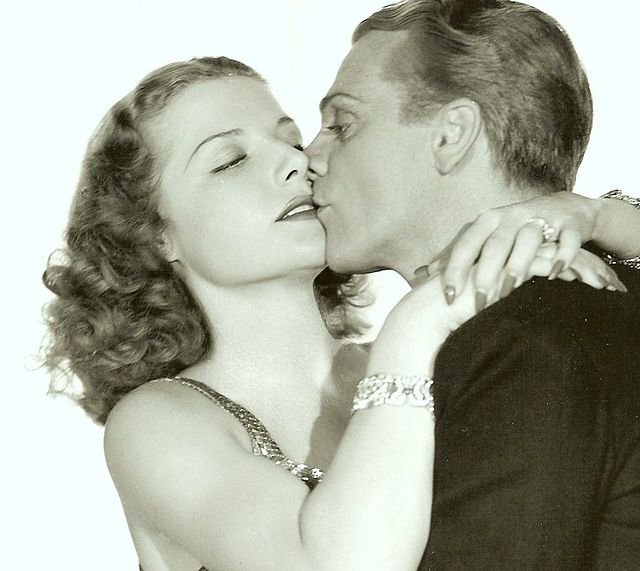
Not only are the street kids attracted to Rocky’s charisma, but so is Laury, a girl from the neighborhood whom the bully Rocky used to tease when she was little (which is precisely why she remembered him).
The moral dilemma posed by the film is enormous. Jerry knows that, despite still being in the underworld, Rocky is ultimately a man of honor and good heart, who has already proven his loyalty in the past (he kept his mouth shut when they caught him in that robbery in which they had both participated) and also his generosity (he will make a large donation to the church and the parish priest’s sports project).
However, Rocky is trapped in the world of crime, and paradoxically, by his own lawyer—who, rather than a man of the law, is a criminal much worse than him, but who moves in high society rather than on the streets. Rocky continues to live in his neighborhood in a humble boarding house, while Frazier runs a kind of casino and has connections with the media and politicians (and what he also has—an important detail—is… an address book with the names of blackmailable people!). With the figure of the crooked lawyer, the film shows us corruption already entrenched in the world of legality, which absorbed “official” street criminals, such as Rocky’s character, into its orbit.
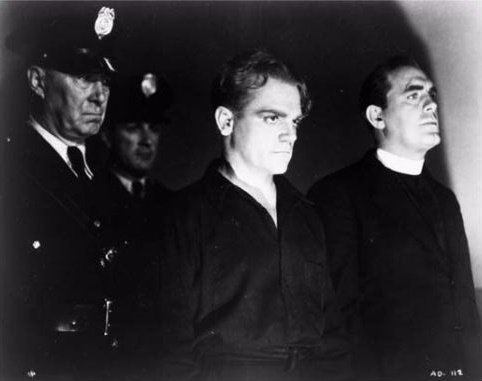
Jerry wants to prevent the neighborhood kids from following in his old friend’s footsteps at all costs. Trying not to reveal too many details, I will only say that the priest will declare open and relentless war on corruption, which means bringing down his friend “for his own good.” In addition, Jerry will ultimately employ a certain amount of “pious” manipulation, begging Rocky to symbolically betray himself. In this way, the gangster can purge his sins and ‘sacrifice’ himself, redeeming himself to “save the souls” of the “angels with dirty faces.” The metaphysical and religious analogies are, as we shall see, quite profound.
The influence of this fascinating movie on later films with similar themes is evident, such as “A Bronx Tale” (Robert De Niro, 1993), in which a young boy is torn between the figure of his father, an honest and humble worker, and that of the neighborhood mob boss, who is a kind of mentor to him.
Two great actors of the time, specializing in film noir, appear in this gem of the gangster genre: Rocky Sullivan is masterfully played by James Cagney, whom we saw in White Heat (Raoul Walsh, 1949). And lawyer Frazier is played by Humphrey Bogart (star of The Treasure of the Sierra Madre and Desperate Hours). Bogart would collaborate again with director Michael Curtiz in the more famous Casablanca (1942).
Felix Hahlbrock Ponce
(Get my books HERE)